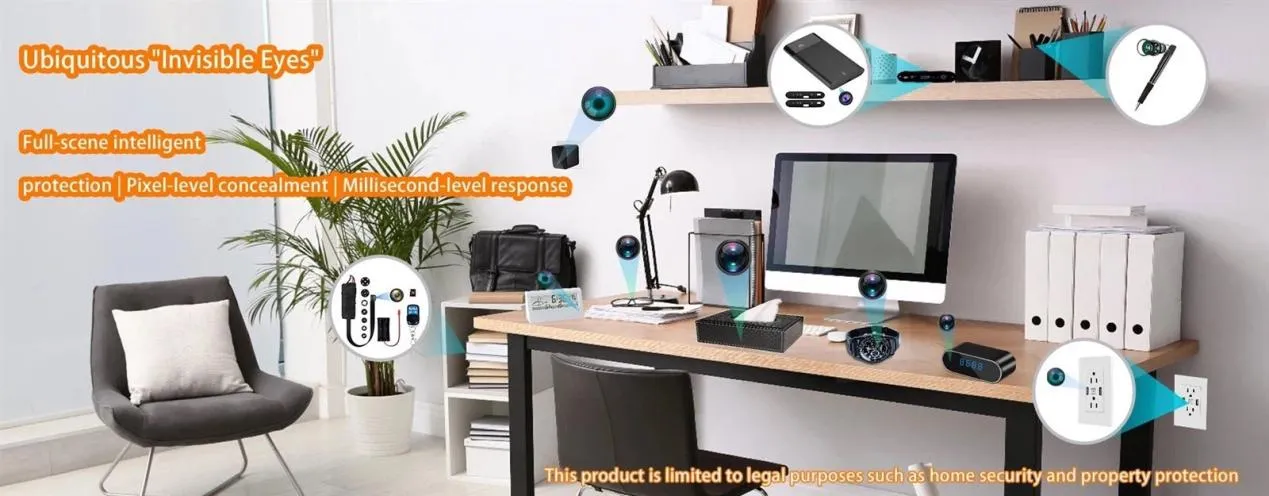

Vehicle thefts, hit-and-runs, and disputes with passengers keep happening. Drivers and fleet operators need reliable evidence that standard visible dash cams often fail to deliver. A thief spots the obvious camera on the windshield and disables it in seconds. A passenger in a rideshare notices the recording and changes behavior or starts an argument.
Hidden cameras for vehicle use solve this by staying out of sight while still capturing clear footage. They come in two broad categories. Some blend into the car's existing features, like sitting behind the rearview mirror. Others look exactly like everyday objects - a car charger, tissue box, or sun visor.
At Allcam, we manufacture discreet surveillance cameras for vehicles. Over the years we have seen what actually works in real driving conditions and what fails after a few months. This guide breaks down the main types, what matters when choosing one, and how different setups perform on the road. We focus on practical trade-offs rather than marketing claims.

Main Types of Hidden Cameras for Vehicle Use
Hidden vehicle cameras fall into several practical groups based on how they are installed and how well they hide.
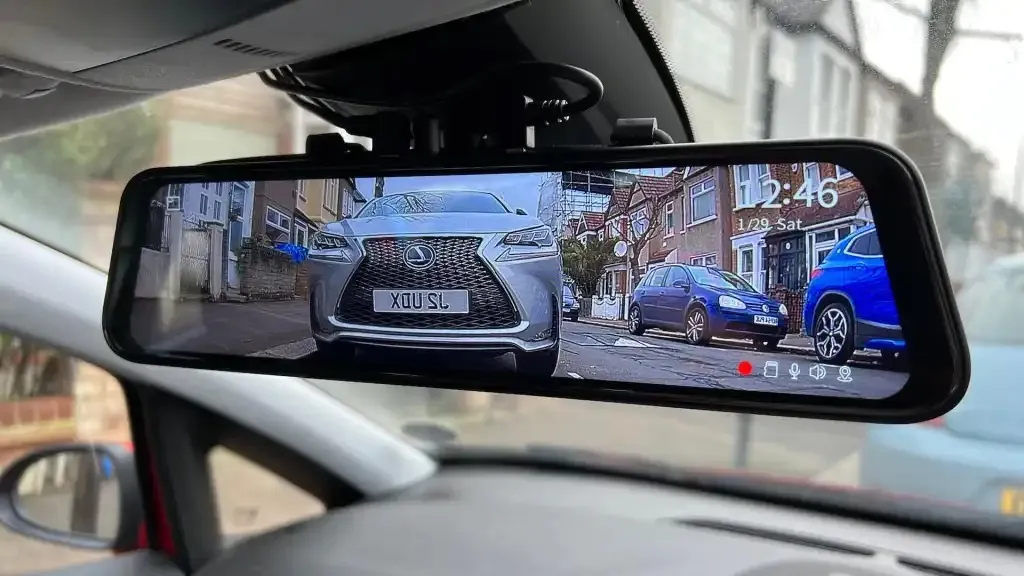
Fusion-Style Hidden Dash Cameras (Rearview Mirror or Mini Dash Types)
These units mount behind the rearview mirror or in a low-profile housing that matches the car's interior lines. They record the road ahead continuously and often add an interior or rear view. Power usually comes from the OBD-II port or cigarette lighter, so they turn on with the ignition.
They behave more like upgraded dash cams. You get loop recording, G-sensor event locking, and parking mode that wakes on impact. Footage quality typically reaches 1080p or 4K with decent night vision through the windshield. Because they sit higher, they capture license plates better in traffic.
The downside is they are still somewhat recognizable to someone who knows where to look. Installation requires routing cables neatly. They work well for drivers who want strong forward coverage without drawing attention.
Fully Disguised Spy Cameras (Car Charger, Tissue Box, Sun Visor Styles)
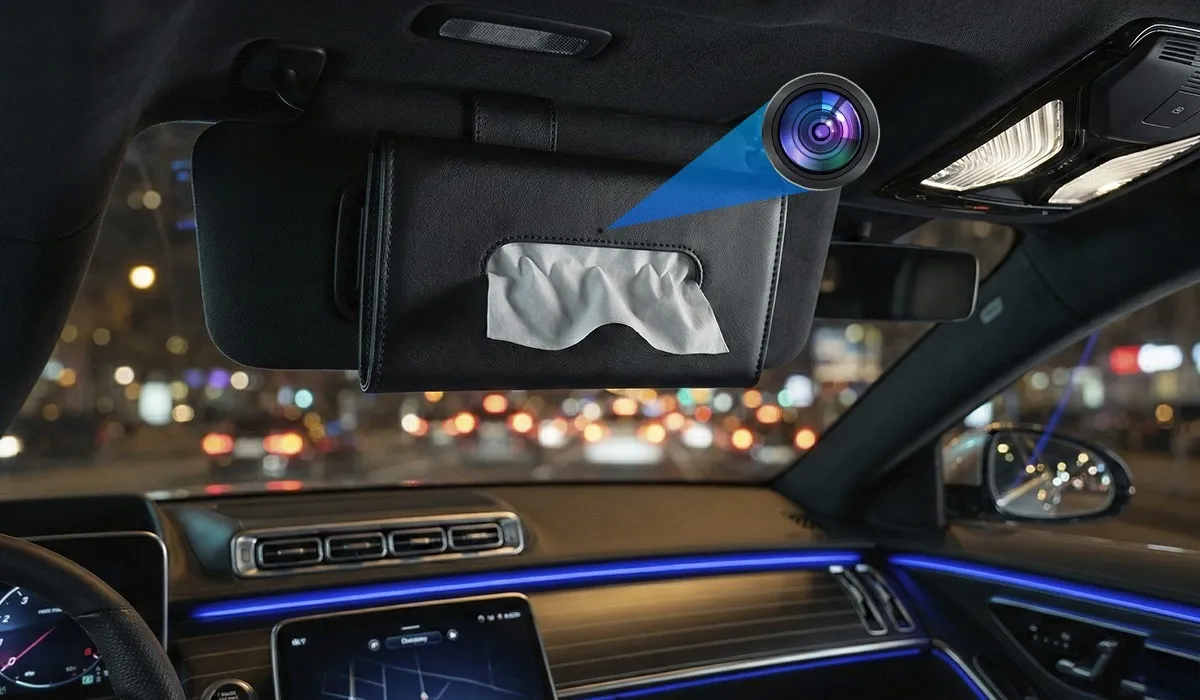
This is where Allcam specializes. The camera is built inside an object that belongs in the car - a working USB car charger, a tissue dispenser that actually holds tissues, or a clip-on sun visor unit. From outside or even from inside the cabin, it looks completely normal.
These excel at interior recording. Net about car or rideshare drivers need passenger behavior evidence without alerting anyone. Placement is flexible: plug the charger into the socket, set the tissue box on the console, or attach the visor unit. Many support motion detection or sound trigger so they do not waste storage on empty periods.
Trade-off: forward road recording is usually limited or requires a second lens. Battery-powered versions give more placement freedom but need periodic charging or swapping. Wiring-free models reduce installation time but may have shorter continuous recording compared with hardwired units.
Wireless and Battery-Powered Mini Spy Cameras
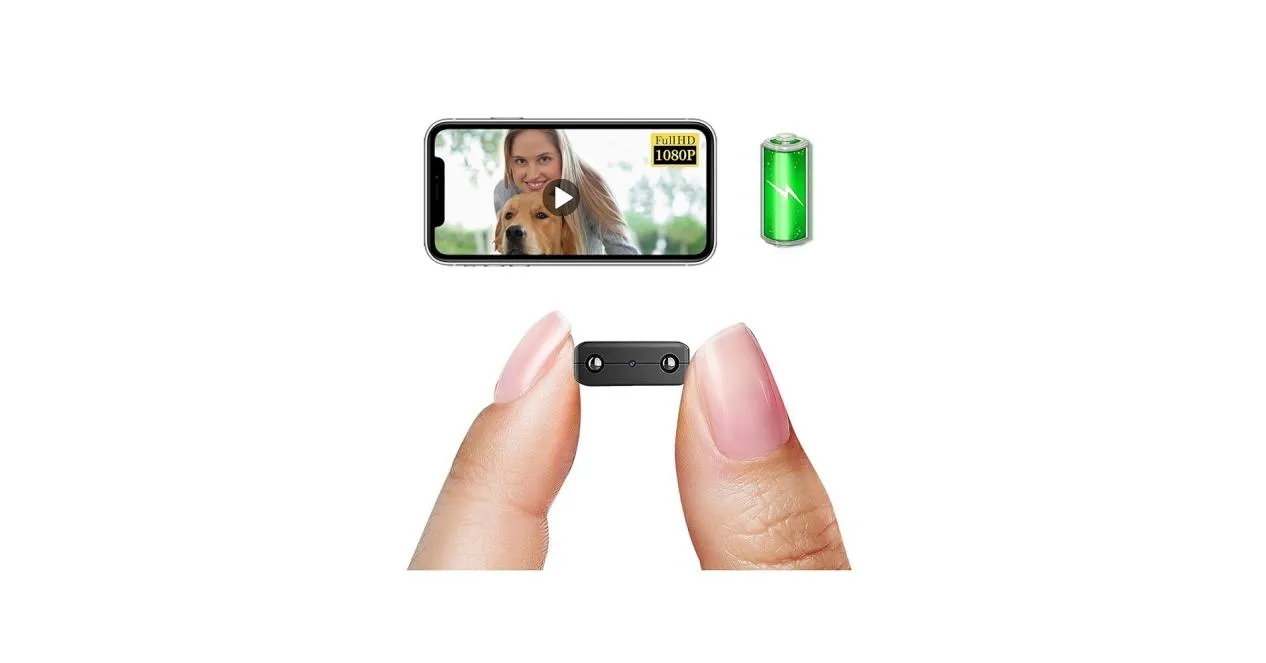
Small, self-contained units that you can tuck under seats, in air vents, or use magnetic mounts. Many include PIR motion sensors that detect body heat and wake the camera only when needed. This extends standby time significantly - some models claim weeks in low-activity scenarios.
They connect via WiFi or 4G for remote viewing on a phone app. You can check the car while away or pull footage before anyone finds the device. Night vision uses IR LEDs that switch to black-and-white in darkness.
These suit parking surveillance or temporary monitoring. However, battery life drops fast if you enable continuous recording or frequent motion events. Wireless range inside a metal car body can also be limited without good antenna design.
Dual-Channel or Multi-Function Setups
Some systems combine a hidden front or mirror unit with an interior disguised camera. Others offer true dual recording from one compact housing. These give both road context and cabin activity in synchronized timestamps - useful for insurance claims or rideshare incidents.
Expect G-sensors, loop recording, and sometimes GPS for speed and location data. The added channels increase cost and storage needs, but they reduce arguments over what actually happened.
Here is a quick comparison of the main types:
|
Type |
Best For |
Power Source |
Hiding Level |
Forward Road View |
Remote Access |
Typical Resolution |
|
Fusion Hidden Dash |
Daily driving + evidence |
Car charger / OBD |
Medium |
Strong |
Optional |
1080p–4K |
|
Fully Disguised (Charger/Box) |
Rideshare, interior focus |
Plug-in or battery |
High |
Limited |
WiFi/4G |
1080p–2K |
|
Battery Mini Wireless |
Parking, temporary use |
Built-in battery |
Very High |
Weak |
Strong |
1080p |
|
Dual/Multi-Channel |
Full coverage needs |
Hardwired |
Medium-High |
Strong |
Optional |
1080p–4K |
Choose based on your primary pain point. One strong camera in the right place often beats a mediocre multi-camera setup.
Key Considerations When Choosing a Hidden Vehicle Camera
Before looking at models, ask yourself a few direct questions. What do you actually need to record - road, cabin, or both? How long must the system run without attention? Will you need to view footage remotely or only after an event?
Video quality comes first for usable evidence. 1080p works for most situations, but 2K or 4K helps read license plates at distance or in motion. Night vision performance varies more than marketing suggests. Test in real low-light conditions if possible; some "starlight" sensors handle mixed lighting better than basic IR.
Triggering and recording modes decide storage efficiency. Continuous loop recording is simple but fills cards quickly. Motion detection or G-sensor event locking saves only important clips. Parking mode that wakes on vibration or impact is essential for overnight security.
Power and runtime create the biggest practical headaches. Hardwired or car-charger units run as long as the vehicle has power but need clean cable routing. Battery models offer true wireless placement yet require recharging or swapping. Look for supercapacitors in some designs - they handle extreme temperatures better than regular batteries.
Connectivity matters if you travel or manage multiple vehicles. WiFi or 4G models let you pull footage to your phone without removing the SD card. Some send motion alerts. Remember that constant cellular use drains power and may incur data costs.
Durability is non-negotiable in a car. Vibration, heat, cold, and dust destroy cheap units. Shock-resistant builds and proper heat dissipation extend life. Avoid models with obvious cheap plastic that will crack or lenses that fog easily.
Installation and discretion separate usable products from shelf decorations. The best hidden cameras have minimal or no visible wires once installed. Magnetic or adhesive mounts should hold during hard braking. Test that the unit does not block your view or create glare.
Budget affects longevity more than initial specs. A slightly more expensive unit that still works after two years beats a cheap one replaced every six months.
Real-World Use Cases
Fleet operators use hidden interior cameras to document passenger interactions and reduce false claims. Rideshare drivers often combine a disguised charger camera with a mirror unit for both cabin and road coverage.
Parking surveillance benefits from motion-activated battery units tucked low in the cabin. They catch break-in attempts or hit-and-runs without draining the car battery excessively when wired properly.
Parents monitoring teen drivers or companies tracking delivery vehicles prefer dual-channel setups that show both road behavior and cabin activity. Insurance companies increasingly accept timestamped hidden camera footage when it is clear and unaltered.
Installation and Maintenance Tips
Place fusion-style units high behind the mirror for best road view while keeping them discreet. Route cables along existing trim lines and secure them so they do not rattle. Fully disguised units are simpler - plug in the charger or set the tissue box where it looks natural.
Clean the lens every few weeks. Dust and film degrade night vision fast. Check SD card health periodically and format it cleanly rather than letting it fill and overwrite unpredictably. Update firmware when the manufacturer releases improvements for stability or new features.
For battery models, monitor charge levels. Extreme temperatures shorten runtime more than most people expect.
Legal Considerations and Common Mistakes
Video recording in public spaces or inside your own vehicle is generally allowed in most countries, but audio recording changes the rules. In the US, one-party consent applies in many states, while others require all-party consent. Europe leans stricter under privacy regulations. China and other markets have their own requirements for commercial or rideshare use.
Always check local laws before enabling audio. Some drivers disable audio entirely to avoid complications and rely on video plus GPS data instead.
Common mistakes include over-focusing on tiny size while ignoring heat management, installing in a way that blocks driver vision, or buying units without proper shock resistance. Another frequent error is assuming all "4K" labels deliver true detail - many lower-cost models interpolate resolution.
Allcam Recommendations
At Allcam we build cameras specifically for discreet vehicle surveillance rather than adapting consumer gadgets. Our car charger hidden camera s combine working USB ports with 1080p or 2K recording and motion options. Tissue box and sun visor models give natural placement for interior coverage.
For drivers needing both road and cabin views, we offer matched sets that keep each component low-profile. Battery-powered mini units with PIR sensors suit parking or temporary monitoring.
Contact us if you need custom disguises or specific integration for fleet use. We understand the real installation constraints and design around them.
Conclusion
A hidden camera for your vehicle should solve a specific problem without creating new ones. Match the type to your actual usage - forward road coverage, interior passenger monitoring, parking security, or a combination. Pay attention to power, triggering, and durability rather than chasing the highest resolution number on paper.
The right choice gives you clear evidence when you need it and stays invisible the rest of the time.
Need help selecting the right model for your vehicle or fleet? Reach out to the Allcam team. We have supplied discreet surveillance solutions for years and can discuss your specific requirements.