


The five most popular nanny hidden camera appearance designs are clock cameras, USB charger cameras, smoke detector-style cameras, photo frame cameras, and power strip cameras. These designs are common because they fit naturally into home environments while supporting practical functions such as motion detection, local storage, WiFi remote viewing, night vision, and continuous power. This structure also reflects the key selection factors extracted from the provided reference material, including location, size, video quality, storage, WiFi capability, night vision, battery life, and motion detection.
A good nanny hidden camera design should not only look discreet.
It should also support practical placement, stable recording, reliable power, and responsible use.
For buyers, the question is not simply "Which hidden camera is the most concealed?" A better question is: which appearance design fits the room, the monitoring purpose, and the technical requirements without looking out of place?
5 Most Popular Nanny Hidden Camera Appearance Designs
The most successful nanny hidden camera appearance designs usually share one trait: they look like they already belong in the room.
A camera hidden in the wrong object can still look suspicious. A charger on a bookshelf, a smoke detector on a desk, or a toy placed in an adult office may attract more attention than a visible camera. Appearance design must match the location.
Below are five appearance designs that are widely used in home monitoring and are also practical from an OEM/ODM manufacturing perspective.
Clock Hidden Camera
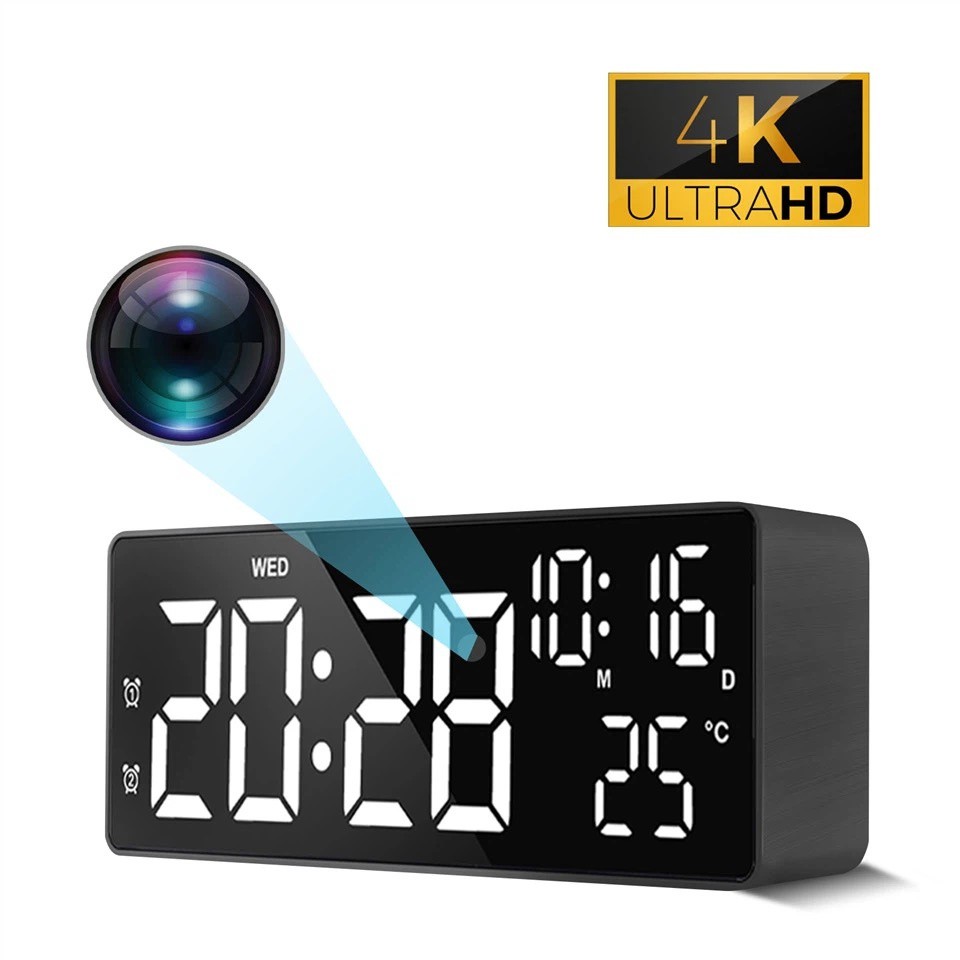
A clock hidden camera is one of the most widely accepted nanny hidden camera designs. It can be made as a wall clock, digital alarm clock, desk clock, or calendar-style clock. In most homes, a clock does not need explanation. It can sit on a cabinet, hang on a wall, or stand on a bedside table without looking unusual.
This design works well in:
- Living rooms
- Bedrooms
- Nurseries
- Kitchens
- Home offices
- Hallways
The biggest advantage is natural placement. A clock is usually positioned at eye level or slightly above eye level, which often gives a better camera angle than low-position devices. A clock camera can capture a broader room view without needing to be installed on the ceiling.
From a product design standpoint, clock cameras also offer useful internal space. A digital clock shell can often fit a camera module, PCB board, WiFi module, SD card slot, speaker hole, battery, and power input. This makes it easier to develop WiFi versions, local-storage versions, plug-in versions, or battery-assisted versions.
But there are limits.
If the body is too thick, the lens hole is too visible, or the display looks cheap, the product loses its natural appearance. Night vision also needs careful design. Visible IR LEDs or an unnatural glossy lens area can make the device look suspicious.
For OEM and private-label projects, clock hidden cameras are usually a safe product direction. The market understands them, the appearance is easy to customize, and the structure gives manufacturers enough room to balance function and reliability.
USB Charger Hidden Camera
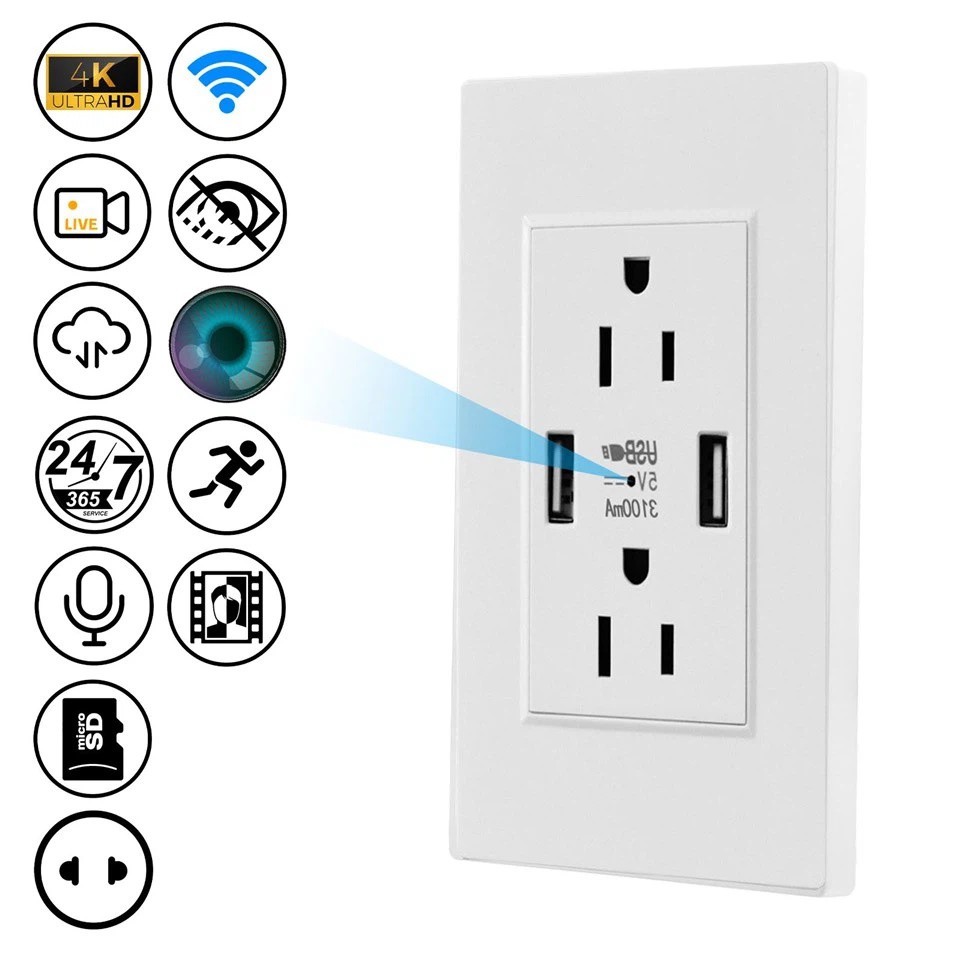
A USB charger hidden camera, also called an AC adapter hidden camera or charger nanny cam, is popular because it solves one of the biggest problems in hidden camera design: power.
Battery-powered cameras are flexible, but battery maintenance is always a problem. A charger-style camera plugs into the wall and can support long-time recording, loop recording, WiFi remote viewing, or motion-triggered recording without frequent charging.
This design works best near:
- Wall outlets
- Hallways
- Children's activity areas
- Living rooms
- Offices
- Crib or play zones, when the outlet angle is suitable
The design is compact and familiar. Many users already have USB chargers in multiple rooms, so the object itself does not attract attention. For online retail channels, the product is also easy to explain: it looks like a charger and works as a monitoring camera.
The limitation is the shooting angle.
A wall outlet may be too low, too close to furniture, or facing the wrong direction. If the socket is near the floor, the camera may record legs, furniture edges, or a limited field of view instead of the actual room activity. In some homes, the charger may be blocked by sofas, curtains, cabinets, or other plug-in devices.
From a manufacturing perspective, USB charger hidden cameras are more demanding than they look. The internal space is tight. The camera module, power circuit, WiFi board, antenna, and heat dissipation area must fit inside a small shell. Poor thermal design can lead to WiFi instability, image failure, or shorter product life.
A charger hidden camera is a strong design for long-time recording, but only when the installation position makes sense. For B2B buyers, this product should not be selected only because it is small. It must be tested under real plug-in conditions.
Smoke Detector Hidden Camera
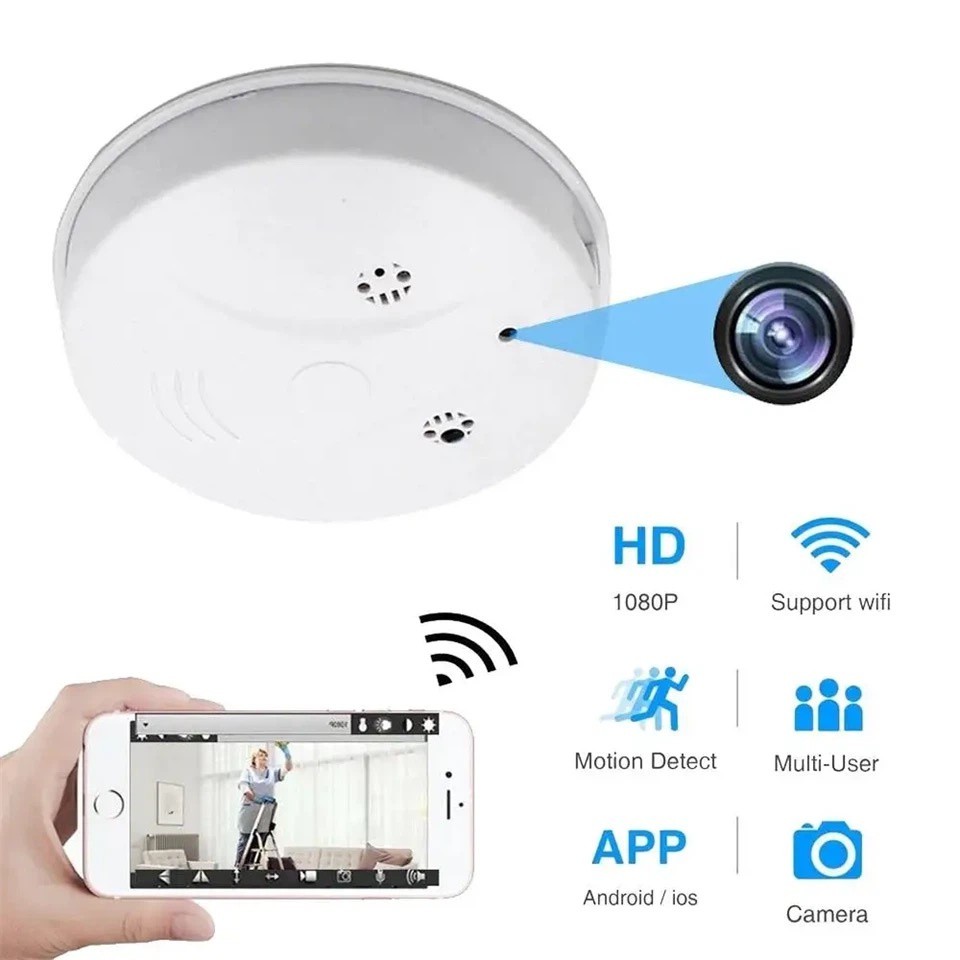
A smoke detector-style hidden camera is designed to look like a ceiling-mounted smoke detector or alarm-style device. It is often used when the goal is wide room coverage from a high vantage point.
This design is suitable for:
- Living rooms
- Hallways
- Large rooms
- Open activity spaces
- Ceiling-mounted monitoring areas
The strongest advantage is coverage. A ceiling or high-wall position can capture more of the room than a desk-level device. For monitoring movement across a living room or open play area, this design can be more practical than a charger or photo frame.
It also has better placement stability. A clock or photo frame can be moved. A charger can be unplugged. A smoke detector-style device mounted high on the wall or ceiling is less likely to be touched during normal household activity.
But the design has clear restrictions.
Installation is less convenient. Maintenance is harder. If the device uses a battery, replacing or charging it may require a ladder. If it uses wired power, installation becomes more complex. A high-angle view is good for room coverage, but not always ideal for face details.
There is also a safety issue that cannot be ignored.
A smoke detector-style hidden camera should not replace a certified smoke alarm unless it is specifically designed and certified for that safety function. Users should still install real smoke detectors where required. This point must be clear in product pages, manuals, and sales communication.
For OEM/ODM projects, smoke detector-style hidden cameras are suitable for fixed indoor monitoring, but they require careful product positioning. They should be sold as camera devices with a smoke-detector-style appearance, not as life-safety alarm products unless certification supports that claim.
Photo Frame Hidden Camera
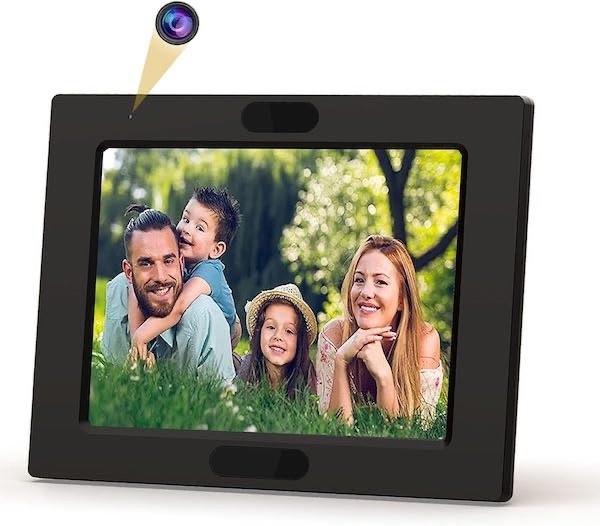
A photo frame hidden camera is a decoration-friendly nanny camera design. It fits homes where users do not want the room to look technical or security-focused. The camera is usually hidden inside the frame, behind a small lens opening, or within the border structure.
This design works well in:
- Living rooms
- Nurseries
- Family rooms
- Bedrooms
- Shelves
- TV cabinets
- Mantels
- Bedside tables
The main advantage is visual softness. A photo frame feels more like home decoration than an electronic device. It can face a sofa, crib area, doorway, or activity zone without looking aggressive.
It is also flexible for design customization. Frame size, color, material, border thickness, lens position, packaging style, and decorative finish can all be adjusted for different markets. For ODM projects, this gives brands more room to create a product that does not look like every other hidden camera on the market.
The weakness is stability.
A photo frame can be moved by children, visitors, cleaners, or family members. A small change in angle may ruin the recording view. The internal space also depends on frame thickness. A thin frame may look better, but it leaves less space for battery, antenna, SD card access, and heat control.
A photo frame hidden camera is best for directional monitoring, not full-room coverage. It should be used where the camera can face the intended area naturally and remain stable over time.
Power Strip Hidden Camera
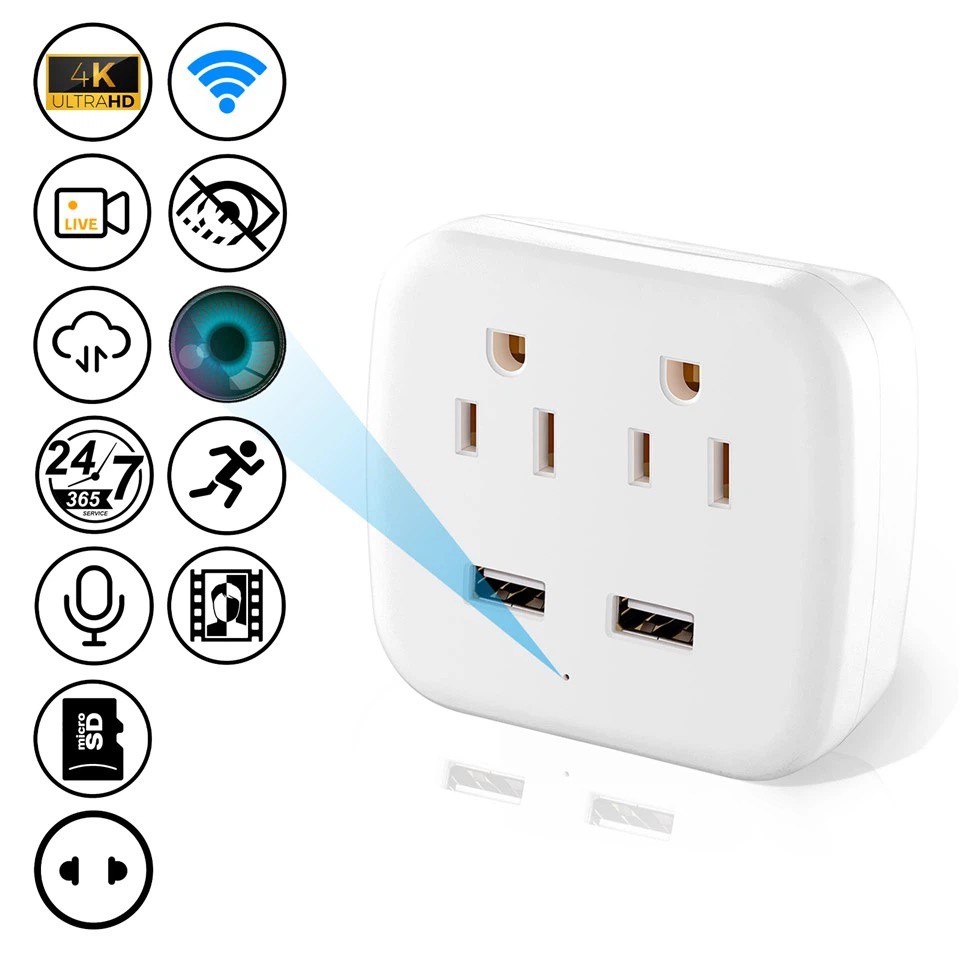
A power strip hidden camera, also called a surge protector hidden camera, is one of the most practical designs for 24/7 plug-in monitoring. It is especially suitable for living rooms, offices, desks, entertainment areas, and home electronics zones.
A power strip already belongs in many rooms. It sits on the floor, under a desk, behind a TV cabinet, or near electronic devices. Unlike a small charger, it usually has more internal space for hardware integration.
This design can support:
- Continuous power
- WiFi remote viewing
- SD card recording
- Loop recording
- Motion detection
- Higher-resolution camera modules
- More flexible antenna placement
For B2B buyers, the power strip design is interesting because it combines utility, internal space, and long-term power. It can be positioned as a more functional product than a simple charger camera.
But it must look and feel real.
A fake-looking power strip will not work as a hidden camera appearance. The housing, sockets, cable direction, weight, surface texture, and plug layout need to feel consistent with a normal power strip. Electrical safety is also more demanding. If the product is designed as a working power strip, the internal power structure, insulation, shell material, and target-market certification requirements must be handled carefully.
The camera angle also needs attention. If the device sits too low, it may capture only furniture legs or floor-level movement. Lens position should be planned around realistic placement, not just shell convenience.
A power strip hidden camera is a strong option for long-time nanny monitoring, but it should be developed with both camera performance and electrical product safety in mind.
Comparison Table: Which Nanny Hidden Camera Design Fits Your Scenario?
Different nanny hidden camera designs solve different problems. The right choice depends on where the device will be placed, how long it needs to record, whether WiFi access is needed, and how naturally the object fits into the room.
|
Design Type |
Best Location |
Best For |
Power Method |
Main Advantage |
Main Limitation |
|
Clock Hidden Camera |
Living room, bedroom, nursery, kitchen |
General home monitoring |
Battery or plug-in |
Natural household appearance |
Placement angle affects coverage |
|
USB Charger Hidden Camera |
Wall outlet areas, hallway, play area |
Long-time recording near outlets |
Plug-in |
Continuous power, compact size |
Limited by socket position |
|
Smoke Detector Hidden Camera |
Ceiling, hallway, large room |
Wide-room monitoring |
Battery or wired |
High vantage point |
Harder to install and maintain |
|
Photo Frame Hidden Camera |
Shelf, mantel, cabinet, bedroom |
Directional home monitoring |
Battery or plug-in |
Blends with decoration |
Easy to move by accident |
|
Power Strip Hidden Camera |
Floor, desk, office, living room |
24/7 plugged-in monitoring |
Plug-in |
More internal space and continuous power |
Low placement may limit angle |
For most home monitoring users, clock and USB charger hidden cameras are the easiest to place and understand. Smoke detector-style cameras are better for wide room coverage. Photo frame cameras fit decoration-focused spaces, while power strip hidden cameras are better for 24/7 plugged-in monitoring.
Key Factors to Consider Before Choosing a Nanny Hidden Camera Design
A hidden camera appearance should never be selected by looks alone. The real test is whether the product works in the intended room, records the right area, and stays reliable during normal use.
Installation Location Comes First
Location is the first selection factor.
Before choosing the product appearance, define where the camera will sit. A USB charger camera only makes sense if the outlet faces the right direction. A smoke detector-style camera only works well if ceiling or high-wall installation is acceptable. A photo frame camera needs a stable shelf or cabinet. A power strip camera needs a position where the lens is not blocked by cables or furniture.
If the object does not naturally belong in that location, the hidden camera will look suspicious even if the lens is small.
The best design is usually the one that blends into the room without needing explanation.
Viewing Angle and Lens Position
A discreet appearance is not useful if the camera records the wrong area.
Lens position determines the actual monitoring result. A clock camera usually provides a mid-level view. A smoke detector-style camera gives a high top-down view. A charger camera depends heavily on socket height and direction. A photo frame camera works best for directional viewing. A power strip camera needs careful lens placement because the device often sits low.
For a typical 15–25 square meter room, wide-angle coverage may be useful, but too wide an angle can reduce detail. For nanny monitoring, the goal is usually not cinematic image quality. The goal is a clear, stable view of the activity area.
Power Supply and Battery Life
Power design decides whether the product is convenient or frustrating.
Battery-powered nanny cameras offer flexible placement, but they need charging or battery replacement. Plug-in designs such as USB charger cameras and power strip cameras are better for long-time recording or 24/7 monitoring.
Battery life claims should be evaluated together with recording mode, WiFi use, motion detection, and night vision. A camera that lasts several days in standby mode may run for a much shorter time during continuous WiFi streaming.
For B2B product planning, this matters. A product with unrealistic battery expectations will create customer complaints, even if the appearance design is good.
WiFi, App Access, and Local Recording
WiFi nanny cameras are useful when users need remote viewing, real-time alerts, or app control. They are popular for parents, homeowners, and caregivers who want to check the room from outside the home.
But WiFi is not always required.
Non-WiFi models can record to a local memory card. They may be preferred by users who want simpler operation, lower network exposure, or no app dependency. For some markets, local recording can also reduce after-sales problems related to router compatibility, weak signals, app setup, or cloud service confusion.
For OEM/ODM projects, the WiFi vs. non-WiFi choice should match the target market. A tech-friendly retail market may prefer app-connected WiFi models. A privacy-sensitive or low-support market may prefer local storage models.
Storage and Motion Detection
Common storage methods include Micro SD card recording, cloud storage, app-based recording, loop recording, and motion-triggered recording.
Motion detection is useful because it reduces useless footage. Instead of recording hours of an empty room, the camera records when movement is detected. This saves storage and makes playback easier.
Still, motion detection is not perfect. Light changes, pets, curtains, shadows, and low-quality algorithms can create false alerts. For nanny monitoring, sensitivity settings should be simple enough for normal users. A product that needs too much adjustment will create support issues.
Night Vision and Low-Light Performance
Many home monitoring situations happen in low light. Children may nap in dim rooms. Elderly care rooms may use soft lighting at night. Hallways and living rooms may not have consistent lighting after dark.
Night vision is useful, but hidden camera night vision must be designed carefully.
Visible infrared LEDs can expose the camera location. Poor IR placement can create glare, reflection, or uneven lighting. A small shell can also make heat management harder when night vision and WiFi are active at the same time.
For hidden camera design, low-light performance is not only a camera module question. It is a shell design, lens placement, IR layout, and heat control question.
Legal and Privacy Considerations Before Using a Nanny Hidden Camera
Nanny hidden cameras involve privacy. That cannot be treated as a minor note.
Laws vary by country, state, and region. In some places, video recording in common areas of a home may be allowed. In other cases, recording employees, caregivers, visitors, or household staff may require notice. Audio recording is usually more sensitive than video recording because consent laws can be stricter.
A nanny hidden camera should not be installed in private spaces such as bathrooms, changing rooms, guest bedrooms, or any place where people reasonably expect privacy. The product should be used for lawful home monitoring, family safety, and caregiver supervision in appropriate common areas.
|
Feature |
User Benefit |
What to Check |
|
WiFi / App Access |
Remote viewing and alerts |
App security and network stability |
|
Motion Detection |
Saves storage and reduces useless footage |
False alerts and privacy boundaries |
|
Audio Recording |
Captures sound context |
Local consent laws |
|
SD Card Storage |
Local recording without cloud service |
Storage capacity and data protection |
|
Compact Design |
Easier concealment |
Avoid private spaces |
Brands and distributors should be careful with product messaging. A responsible nanny hidden camera product should not be promoted as a tool for illegal surveillance. It should be positioned for lawful home monitoring, caregiver supervision, and family safety in appropriate common areas.
This is not only a legal issue. It is also a trust issue.
What Makes a Nanny Hidden Camera Design Suitable for OEM/ODM Projects?
For OEM and ODM buyers, the best appearance design is not always the one that looks most creative. It is the one that can be manufactured consistently, performs reliably, and fits the target market.
A hidden camera product can fail for very ordinary reasons: unstable WiFi, blocked lens, poor heat control, weak shell material, bad SD card access, or unrealistic power claims. These problems are not always visible in product photos, but they appear quickly in real customer use.
Internal Space and Module Layout
A nanny hidden camera needs more than a shell and a lens hole.
The internal design must fit the camera module, PCB board, battery, WiFi antenna, SD card slot, power circuit, and heat dissipation space. Clock cameras and power strip cameras usually offer more internal space. USB charger cameras are more compact, which makes internal layout harder.
This is one reason appearance selection should start early in product development. If the shell does not support the required components, the project will face compromises later.
Natural Lens Placement
Lens placement is one of the most important details in disguised camera design.
A smaller lens hole is not always better if it blocks light, narrows the view, or reduces image quality. A lens hidden too deeply inside the shell may create a tunnel effect. A lens placed in an unnatural position may attract attention.
Good lens placement should meet five conditions:
- It does not look obvious
- It has a usable field of view
- It is not blocked by decoration or structure
- It supports stable mass production
- It fits the normal orientation of the object
This is where many low-cost hidden camera designs fail. They hide the lens, but they also damage the image.
Heat Dissipation and Long-Term Reliability
WiFi transmission, continuous recording, night vision, and plug-in power all create heat. Heat is one of the most common hidden problems in compact surveillance products.
A discreet design is not useful if it overheats, disconnects from WiFi, or fails during long-time recording.
For USB charger and power strip designs, heat control is especially important. The product may stay plugged in for long periods. If the internal layout is too tight or the shell material traps heat, reliability will suffer.
For B2B buyers, this affects more than performance. It affects return rates, reviews, warranty claims, and brand reputation.
Power Design and Electrical Safety
Plug-in hidden cameras need extra attention. USB charger cameras and power strip cameras are not just camera products; they also involve power structure.
Key considerations include:
- Internal insulation
- Shell material
- Plug type
- Power circuit design
- Long-time working stability
- Target market certification requirements
- Heat control under continuous use
A product that looks good in a sample photo may still be risky if the power design is weak. For private-label buyers, electrical safety should be checked before appearance customization, packaging design, or bulk orders.
Market-Friendly Appearance and Packaging
A good OEM/ODM hidden camera design must also fit the sales channel.
North American markets often prefer practical, easy-to-install designs with clear functions. European markets may pay more attention to privacy messaging, product quality, and compliance language. E-commerce channels need product images that clearly explain the function without encouraging misuse. Wholesale channels care more about stable supply, SKU control, and low after-sales risk.
Appearance, packaging, user manual, app instructions, and legal disclaimers should work together. If the product looks discreet but the packaging creates the wrong message, the brand still takes risk.
For OEM/ODM projects, appearance design should support both technical reliability and market positioning.
Recommended Nanny Hidden Camera Design Strategy for B2B Buyers
For entry-level product lines, clock hidden cameras and USB charger hidden cameras are usually safer choices. They are familiar, easy to understand, easy to display online, and suitable for general home monitoring.
For long-time recording or higher-function product lines, power strip hidden cameras can be stronger. They offer plug-in power, more internal space, and better room for WiFi, SD card storage, motion detection, and higher-resolution camera modules.
For fixed monitoring projects, smoke detector-style cameras can be useful because they provide wide room coverage. But they need clearer installation guidance and safety disclaimers. They should not be marketed as certified smoke alarms unless they truly meet that function and certification.
For decoration-focused product lines, photo frame hidden cameras are suitable. They feel less technical and fit softer home environments, especially living rooms, nurseries, and family rooms.
A simple product strategy could look like this:
|
Product Line Goal |
Recommended Design |
Reason |
|
Entry-level retail SKU |
Clock or USB charger |
Easy to understand and sell |
|
Long-time recording SKU |
Power strip |
Plug-in power and more internal space |
|
Wide-room monitoring SKU |
Smoke detector-style |
High-position room coverage |
|
Decoration-friendly SKU |
Photo frame |
Softer home appearance |
|
ODM differentiation |
Clock, photo frame, power strip |
More room for appearance customization |
As a hidden camera manufacturer, Allcam can support OEM/ODM nanny hidden camera projects, including appearance design, camera module selection, WiFi function integration, power solution design, logo customization, packaging, and private-label production.
Conclusion
The best nanny hidden camera appearance design depends on where the camera will be placed, how long it needs to record, whether remote viewing is required, and how naturally the object fits into the room.
Clock and USB charger hidden cameras are usually the most practical choices for general home monitoring. Smoke detector-style cameras are better for wide-room coverage. Photo frame cameras work well in decoration-focused spaces. Power strip hidden cameras are suitable for 24/7 plugged-in monitoring and more function-rich product development.
For B2B buyers, appearance design should not be selected only by concealment. A successful nanny hidden camera also needs stable internal structure, proper lens placement, reliable WiFi or local recording, heat control, safe power design, and market-friendly packaging.
If your brand is developing or upgrading nanny hidden camera products, Allcam can provide OEM/ODM support for appearance design, camera module integration, power solutions, private labeling, and packaging customization. Contact us to discuss a hidden camera design that fits your target market.
FAQ
What is the most popular nanny hidden camera design?
Clock hidden cameras and USB charger hidden cameras are among the most popular nanny hidden camera designs. They are easy to place, familiar in home environments, and suitable for everyday monitoring. Clock cameras work well on shelves or walls, while USB charger cameras are better for plug-in long-time recording.
Which nanny hidden camera design is best for long-time recording?
USB charger and power strip hidden cameras are usually better for long-time recording because they use plug-in power and do not rely only on battery life. Power strip designs often provide more internal space than compact charger-style designs, which can help with WiFi layout, storage access, and heat control.
Which nanny hidden camera design is best for wide room coverage?
Smoke detector-style hidden cameras are often better for wide room coverage because they can be installed at a higher position and provide a broader view of the room. They are suitable for hallways, living rooms, and larger indoor spaces. They should not replace certified smoke alarms unless designed and certified for that function.
Are nanny hidden cameras legal?
Nanny hidden camera laws vary by country, state, and region. Video monitoring in common home areas may be allowed in some places, but audio recording or recording in private spaces can create legal risks. Users should check local laws before installation and avoid bathrooms, changing rooms, and other private areas.
Do nanny hidden cameras need WiFi?
Not always. WiFi nanny cameras support remote viewing, app control, and real-time alerts. Non-WiFi models usually record to a local memory card and may be preferred by users who want simpler operation, lower network exposure, or no app dependency.
Can nanny hidden cameras record audio?
Some nanny hidden cameras can record audio, but audio recording is more legally sensitive than video recording in many regions. Brands and sellers should clearly explain this function and remind users to follow local consent laws.
Is a hidden nanny camera better than a visible security camera?
A hidden nanny camera is better for discreet observation, while a visible security camera is better for deterrence. The right choice depends on the monitoring purpose. For general security deterrence, visible cameras may work better. For specific caregiver monitoring in appropriate common areas, discreet designs may be more suitable.
What other nanny hidden camera appearances are available?
Besides the five popular designs, nanny hidden cameras can also appear as teddy bears, books, lamps, plants, air purifiers, routers, speakers, or mini standalone cameras. These designs may work in specific rooms, but they should be selected based on placement stability, viewing angle, power supply, and privacy rules.