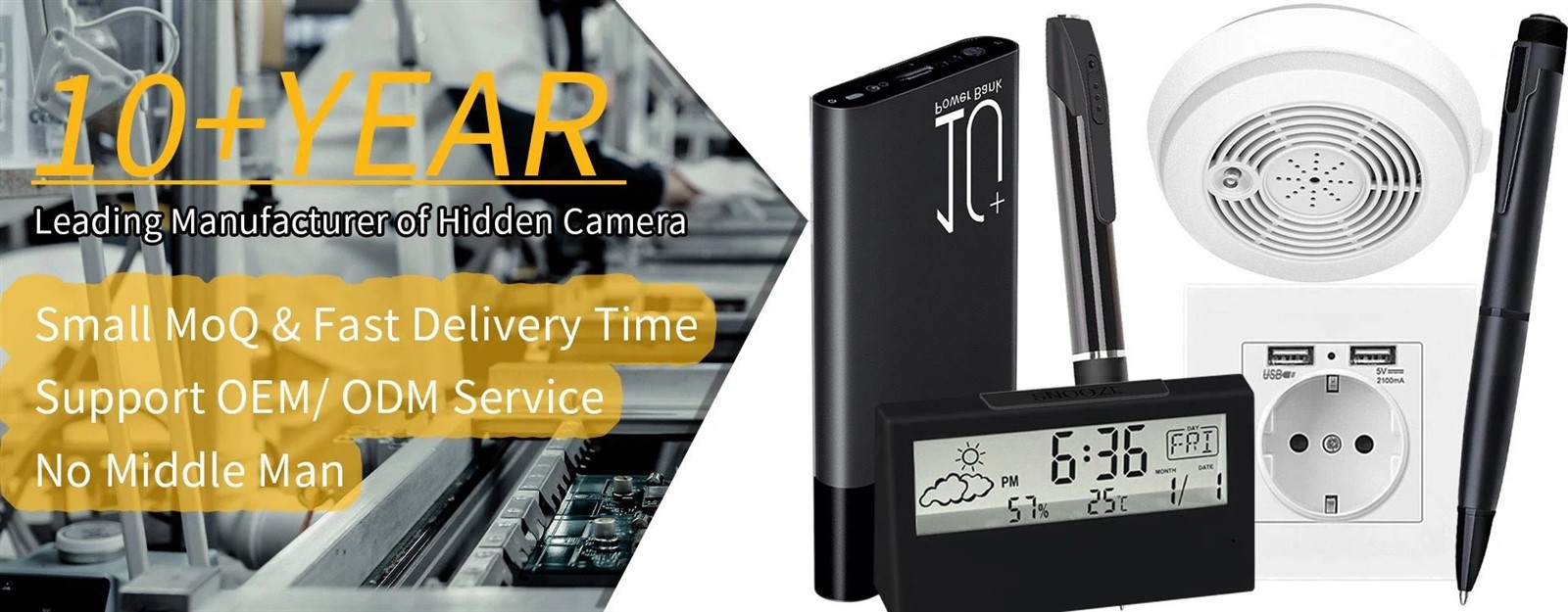

Hidden cameras - also called covert cameras, mini hidden cameras, or pinhole cameras - sit at the intersection of security tech and tight regulations. When buyers search for a hidden camera supplier or spy camera factory in China, most listings look like direct manufacturers. In practice, many operate as trading companies that source from actual producers and add their margin.
A real hidden camera manufacturer controls production lines for lenses, sensors, circuit boards, and assembly. They handle technical tweaks, certification consistency, and long-term component sourcing. A trading company buys finished or semi-finished units, repackages them, and sells under their brand. The difference shows up in pricing stability, customization depth, quality consistency, and response to technical issues.
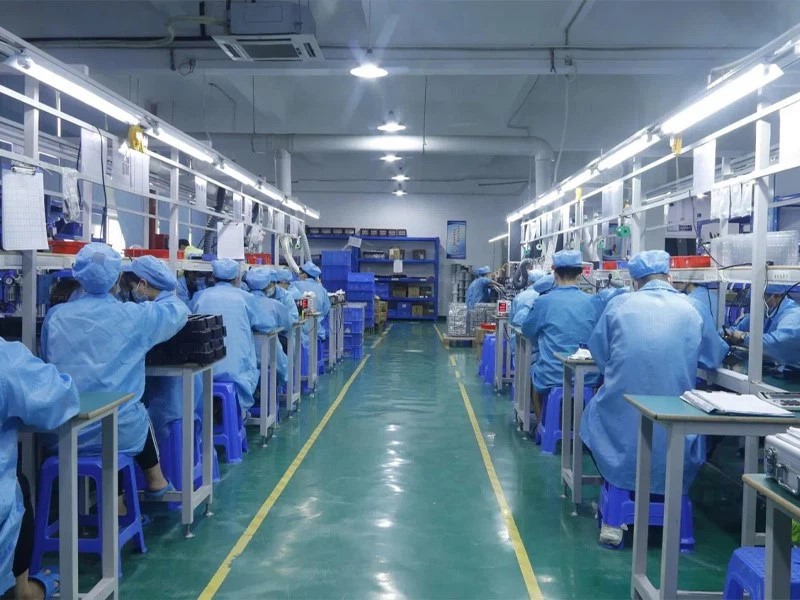
Factory vs Trading Company: What's the Difference?
In the hidden camera space, the gap between a factory and a trading company goes beyond labels. It affects what you can realistically expect in production runs, engineering support, and supply chain reliability.
Factories typically maintain dedicated workshops for PCB assembly, lens integration, firmware flashing, and final testing. Their business model ties directly to manufacturing output. Trading companies maintain sales teams and supplier networks instead. They aggregate orders from multiple sources and often handle export paperwork.
Here is a straightforward comparison based on how these differences play out for hidden camera buyers:
|
Aspect |
Real Hidden Camera Factory |
Trading Company |
|
Pricing |
More competitive on volume; no extra layer |
Higher unit cost due to margin |
|
MOQ |
Usually higher, linked to production batches |
Often lower and more flexible |
|
Product Focus |
Concentrated on covert/mini/pinhole cameras and related components |
Broad catalog across unrelated categories |
|
Customization (OEM/ODM) |
Deeper control over hardware and firmware changes |
Limited to surface-level rebranding or minor tweaks |
|
Quality Consistency |
Direct oversight of materials and processes |
Depends on chosen sub-suppliers |
|
Technical Support |
Engineers familiar with sensor/lens trade-offs |
Sales staff relays questions to factories |
For covert cameras, these distinctions matter more than in generic electronics. Privacy regulations, detection avoidance features, and certification requirements (CE, FCC, RoHS) demand tighter process control. A trading company may struggle to guarantee consistent performance across batches if they switch suppliers.
The core judgment here is simple: factories give you closer access to the actual production reality. Traders give you convenience at the cost of visibility and margin.
Why It Matters When Choosing a Hidden Camera Supplier
Sourcing hidden camera suppliers involves more than landing a low price. Hidden cameras often end up in sensitive installations where reliability and compliance count. Choosing the wrong type of supplier can create cascading issues.
Trading companies sometimes offer attractive low MOQs or quick samples. But when production scales, you may see batch variations in video quality, power consumption, or heat management because they lack direct control over the line. Certification documents may not match the actual manufacturer, creating compliance headaches during import or resale.
A real China hidden camera manufacturer can adjust lens angles, modify housing for specific concealment needs, or optimize firmware for particular recording triggers. They also maintain steadier component sourcing for key parts like image sensors, which directly affect low-light performance in pinhole designs.
Buyers who skip verification often discover problems only after receiving containers: mismatched specs, higher failure rates, or delays when issues arise. Direct factory cooperation reduces these risks and usually delivers better long-term cost control, especially for repeat OEM orders.
In short, the factory-versus-trader decision shapes how much real influence you have over the final product.
10 Proven Ways to Identify a Real Hidden Camera Factory
Here are the most reliable checks, ordered roughly from easiest/quickest to more involved. Combine several rather than relying on any single one.
1.Check the Business License
Request the Chinese business license and look at the business scope . Factories include terms like "manufacture," "production," or "processing" . Trading companies list "trading," "sales," "wholesale," or "import/export".
Verify details on China's National Enterprise Credit Information Publicity System (gsxt.gov.cn) using the company's Chinese name or 18-digit Unified Social Credit Code. This step is hard to fake and gives the clearest legal signal.
2.Verify Company Address
Compare the registered address on the license with the claimed factory location. Use Google Maps or Baidu Maps satellite view. Real production sites usually sit in industrial parks or factory zones. Addresses in downtown office buildings or residential areas point toward trading operations.
3.Request VAT Invoice Details
Ask whether they can issue special VAT fapiao . Factories involved in manufacturing typically handle VAT differently from pure traders and can provide documentation aligned with production. Mismatches between invoice issuer and claimed manufacturer raise flags.
4.Review Product Catalog Specialization
A genuine spy camera factory focuses heavily on hidden, pinhole, or covert camera categories with detailed technical specs on lenses, resolutions, and concealment features. Traders often list dozens of unrelated product types (from phone accessories to home appliances) with thinner details.
5.Test MOQ and Quotation Behavior
Factories usually quote with production-oriented MOQs and more precise lead times. Traders may offer very low MOQs but show less confidence when you ask detailed technical questions about component sources or process controls.
6.Check Certification Consistency
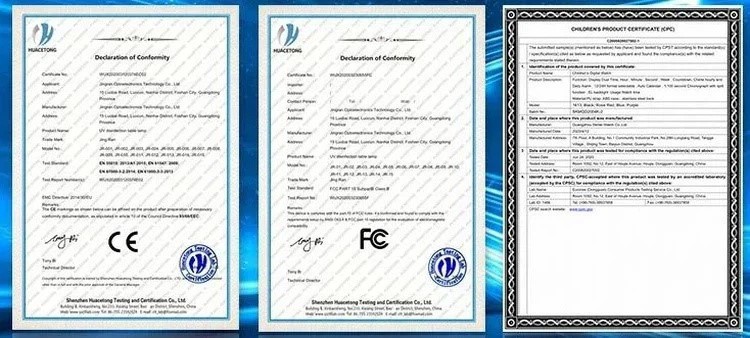
Examine CE, FCC, or RoHS certificates. The company name on the certs should match the business license exactly. Request third-party audit reports if available. Inconsistent names suggest the certs belong to a sub-supplier rather than the quoted entity.
7.Request a Video Factory Tour
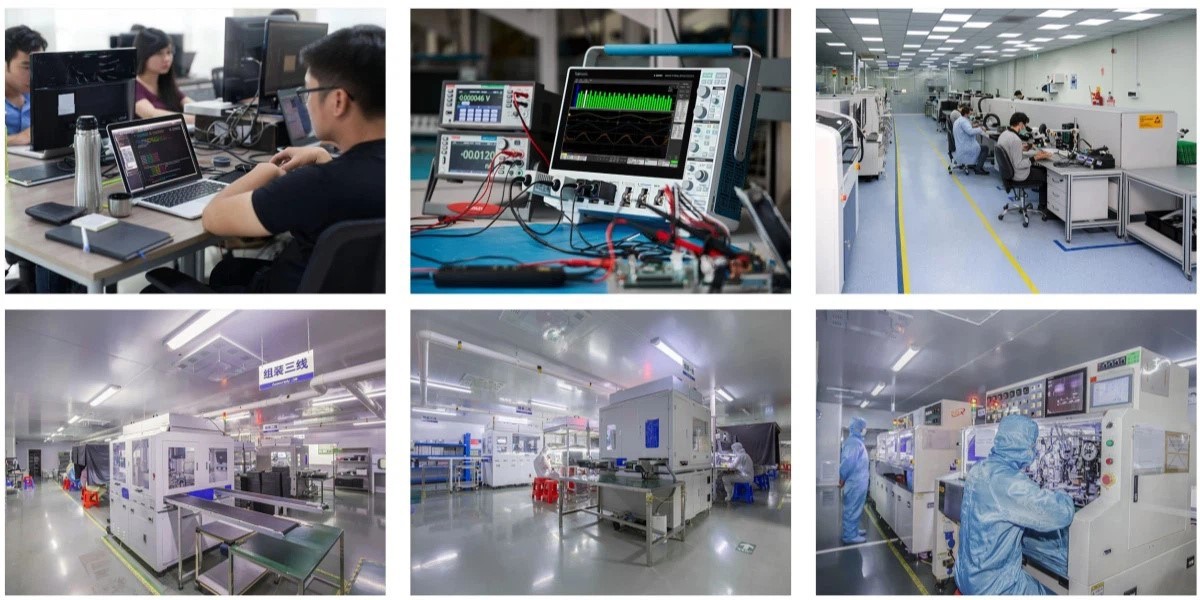
Ask for a real-time video walkthrough of the production area. Look for active assembly lines, workers in consistent environments, and equipment that matches hidden camera processes (soldering stations, testing rigs, lens alignment tools). Vague excuses or pre-recorded videos are common red flags from traders.
8.Compare Registered Capital and Company Age
Higher registered capital and longer operating history (visible on the license) often correlate with established manufacturing capability, though this is a supporting indicator rather than decisive.
9.Evaluate Technical Support Depth
Pose specific questions about lens options, sensor choices, power management, or firmware customization. Factories with in-house engineering tend to answer directly and knowledgeably. Traders usually need time to consult their sources and give shallower replies.
10.Watch for Additional Red Flags
- Prices significantly below reasonable material + labor costs.
- Overly generic or marketing-heavy company names without technical substance on the website.
- Hesitation to share documents or provide consistent contact details.
- Refusal to connect you with production staff for technical discussions.
These checks work best when used together. A single green flag means little; multiple consistent signals build confidence.
Benefits of Working Directly with a Hidden Camera Manufacturer
Direct cooperation with a real hidden camera manufacturer removes an intermediary layer. You gain clearer visibility into material choices and process stability, which matters for covert devices where performance under concealment constraints is critical.
Factories can support deeper OEM work - from custom housing dimensions to tailored recording logic - without extra markup. Lead times and quality tend to stabilize once production processes are locked in. Technical issues get resolved faster because engineers who built the product are accessible.
For importers, wholesalers, or platform sellers, this usually translates into better margin control and fewer surprises in compliance or performance. The relationship also scales more predictably for future iterations of mini or pinhole camera designs.
About Hytech – A Trusted Hidden Camera Manufacturer in China
Shenzhen Hytech Technology Co., Ltd was established in 2014. With over 11 years of focused experience in hidden camera customization and R&D, we operate as a real manufacturer rather than a trading company.
We maintain full in-house capabilities covering hardware, software, ID, and structural design. This allows us to develop new covert camera products quickly according to client requirements and respond fast to market changes. From initial concept to finished product, our average development cycle is around 3 months.
Our product range includes micro cameras, disguised cameras, wireless Wi-Fi cameras, portable hidden cameras, nanny cameras, DIY module cameras, and motion detection hidden cameras. All models meet CE and FCC international standards and are primarily exported to the United States, Europe, South America, Japan, and Southeast Asia.
As a dedicated hidden camera manufacturer in China, we specialize in high-quality OEM and wholesale solutions. If you are evaluating suppliers, you are welcome to apply the verification steps above to us.
For specific project needs, please visit our hidden camera series to explore available options and discuss customization possibilities.
Conclusion
Distinguishing a real hidden camera factory from a trading company comes down to verifying manufacturing capability rather than accepting marketing claims. The business license scope, physical address, product focus, and ability to demonstrate production processes give the strongest signals.
Buyers who invest time in these checks reduce risks around quality variation, certification mismatches, and cost inflation. They also position themselves for more effective collaboration on custom covert camera solutions.