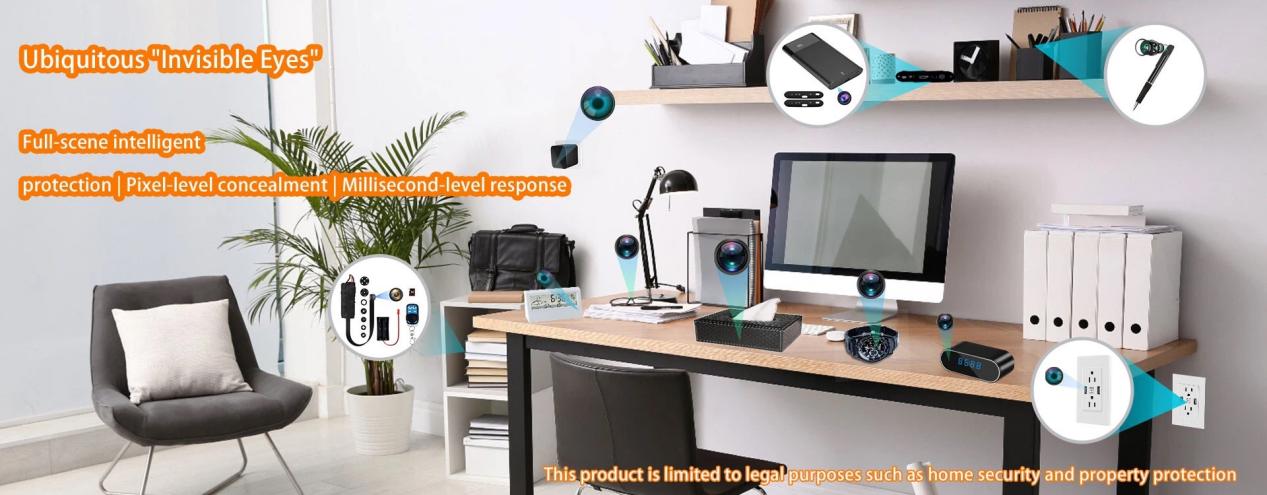

Hidden cameras promise discreet protection, but many fail when it matters most - at night. Buyers searching how to spot fake night vision hidden cameras often discover too late that a device marketed with "night vision" delivers nothing but darkness when lights go out. This guide cuts through the noise with practical, experience-based advice for both everyday users and B2B buyers.
What "Fake Night Vision" Really Means in Hidden Cameras
Fake night vision doesn't always mean the entire camera is a dummy. In most cases, the camera records fine during the day but fails to produce usable footage in low or zero light. This creates a dangerous illusion of security. A warehouse manager installs what looks like a solid hidden camera in a dimly lit storage area, only to find blank or blurry night recordings after a break-in. A parent uses a nanny cam disguised as a charger and misses critical overnight activity. These are common real-world failures.
True night vision in hidden cameras relies on infrared (IR) illumination combined with a sensitive sensor and proper optics. Without this complete chain, the "night vision" label becomes marketing fiction.

What a Real Night Vision Hidden Camera Must Deliver
A genuine night vision hidden camera performs reliably in total darkness. It needs several working components working together.
IR LEDs provide invisible or near-invisible light. The image sensor must respond well to near-infrared wavelengths. The lens and housing must transmit IR effectively without obstruction. Power management must sustain performance without excessive heat or rapid battery drain.
850nm IR typically offers stronger illumination and better range, though it may show a faint red glow. 940nm IR stays nearly invisible to the naked eye, making it ideal for truly stealth applications, but it usually delivers shorter effective range and demands higher-quality sensors. Tiny hidden models claiming both perfect invisibility and long-range 940nm performance deserve extra scrutiny.
Real devices also handle automatic day-to-night switching cleanly and maintain usable detail for identification, not just vague shapes.
Common Signs of Fake or Weak Night Vision Hidden Cameras
Watch for these red flags in product listings and samples.
Many cheap units advertise "4K night vision" or "0 Lux" but rely on software brightening that creates heavy noise instead of true IR illumination. Others use weak or poorly positioned IR LEDs that only work in mild low light. Marketing claims like "up to 15m night vision" often come from ideal lab conditions with reflective white walls - far from real bedrooms, warehouses, or vehicle interiors.
Overly low prices combined with ambitious specs signal risk. Quality IR components, proper lens design, and real testing add cost. Extremely small hidden cameras face physical limits on LED power, battery capacity, and heat dissipation.
Fake night vision creates more danger than no camera at all. Users assume protection exists at night, but critical evidence disappears when needed most.
How to Test Night Vision Performance in Hidden Cameras
Don't trust photos or spec sheets. Test in real conditions.
Phone Camera IR Check and Its Limitations
Turn off the lights and use your smartphone's camera to scan for IR LEDs. Many 850nm LEDs appear as bright dots or purple glow on the screen. This quick test confirms the LEDs are active, but it proves little about actual image quality. 940nm LEDs often remain nearly invisible even to phone cameras. A glowing LED does not guarantee usable range or clarity.
Complete Dark Room Testing Procedure
- Create total darkness - close curtains, cover any indicator lights, and eliminate stray light from doors or devices.
- Test at multiple distances: 1m, 3m, and claimed maximum range.
- Check face and motion recognition. Can you identify a person or read basic actions?
- Observe center versus edge brightness. Poor designs create hot spots in the middle with dark corners.
- Run the camera continuously for 30–60 minutes. Monitor heat buildup, frame drops, or battery drain.
- Compare day-to-night switching. The transition should be smooth and automatic without excessive noise.
Always demand original dark-room sample videos from the supplier, not stock images. For B2B orders, require batch consistency guarantees and random sample re-testing.

True vs Fake Night Vision Hidden Cameras: Side-by-Side Comparison
|
Aspect |
Real Night Vision Hidden Camera |
Fake or Weak Night Vision Unit |
|
IR Performance |
Strong, consistent illumination in total darkness |
Weak LEDs or software tricks; fails in zero light |
|
Effective Range |
Reliable 3-8m depending on model and wavelength |
Inflated claims; drops sharply in real conditions |
|
Image Usability |
Clear identification of faces and actions |
Blurry shapes or heavy noise |
|
Hidden Design |
Proper IR window and heat management |
Obstructed LEDs or poor housing transmission |
|
Power & Stability |
Sustains night mode without quick failure |
Overheats or drains rapidly |
This table highlights why testing beats reading specifications.

Hidden Camera Night Vision Buyer's Checklist
Prioritize these points before purchase.
- Request the exact IR wavelength (850nm or 940nm) and supporting test conditions.
- Demand dark-room footage showing real distances and identification capability.
- Verify sensor type, lens specs, and housing material compatibility with IR.
- Check power consumption in night mode and continuous runtime.
- For B2B buyers, ask for full spec sheets, consistency guarantees between samples and bulk, and relevant certifications (FCC, CE, RoHS).
Different scenarios need different priorities. A bedroom nanny cam favors silent 940nm operation. A warehouse unit may need stronger 850nm range and better heat tolerance. Vehicle or outdoor disguised units require robust sealing and stable power.

Why Night Vision Is Harder to Get Right in Hidden Cameras
Compact hidden designs create tough engineering trade-offs. Limited internal space restricts LED count and power. Small lenses reduce light intake. Disguised housings (smoke detectors, chargers, outlets) often block or weaken IR transmission. Battery-powered units face sharp runtime drops when IR activates. Heat from LEDs in tight enclosures can degrade performance or trigger shutdowns.
These physical constraints explain why many low-cost hidden cameras deliver disappointing night results despite confident marketing claims.
Conclusion
Spotting fake night vision hidden cameras comes down to one principle: judge by real dark-room performance, not marketing words or glowing LEDs. Test thoroughly, demand evidence, and choose suppliers who understand the engineering challenges of compact designs.
Ready to source or develop reliable hidden cameras with genuine night vision? The Allcam team specializes in discreet surveillance solutions engineered for consistent low-light performance. Contact us today to discuss your project requirements or request sample testing.
FAQ
Does seeing red dots on my phone mean the night vision is good?
It confirms the LEDs are working, especially with 850nm. It does not guarantee range, clarity, or reliability. Always verify with actual dark footage.
Are low-priced high-spec cameras worth trying?
Rarely. Quality IR components and proper testing cost money. Extreme bargains usually cut corners on critical night performance.
Do certifications guarantee real night vision?
Certifications verify safety and basic compliance. They do not prove image quality or IR effectiveness in darkness.
How can B2B buyers ensure sample matches bulk production?
Require clear specifications, standardized dark-room testing protocols, and rights to re-test random production units.
What makes a manufacturer reliable for hidden night vision cameras?
Transparent technical details, willingness to provide real test videos, and proven consistency across orders.